Research Article | | Peer-Reviewed

Edge-Based Telemedical Architecture Integrating Edge Devices and Lightweight AI for Healthcare in Kenya

Received: 10 November 2025     Accepted: 16 December 2025     Published: 31 December 2025
Views:       Downloads:
Abstract

Background: The growing burden of multimorbidity, which is the occurrence of two or more chronic conditions simultaneously in an individual is a great burden on the healthcare system of Kenya that is already defined by unequal distribution of resources and access to specialists. The solution to this gap may be found in telemedicine, but due to the dependency on centralized cloud computing, the effectiveness in the context of the resources-constrained environment is critically impaired. This dependence leads to chronic problems such as unreliable internet connection, power connectivity issues, large data latency making real-time intervention difficulty, excessive bandwidth prices, and, ultimately, piecemeal care of the multimorbid patients. Methods: The study employed the use of a combination of various approaches as it started with an extensive analysis of the current state of telemedicine and its limitation in managing multimorbidity both globally and locally. Then, an architectural framework of a conceptual edge-based framework was designed that defined the primary elements of local data processing, offline functionality, and real-time clinical decision support. Results: This study developed a new, edge-computing telemedical architecture that moves vital data processing and storage operations out of the cloud and on to local edge nodes (edge devices) at the point of care. The main aim was to develop a more robust, effective and responsive telehealth system that will be able to work efficiently even in low-connectivity settings. The possible effect of this framework was compared to the key performance indicators showing that there was a substantial theoretical reduction in the latency of data transmission and the bandwidth used. Moreover, the telemedical model is projected to improve continuity and coordination of care through the processing and acting of critical patient data about IoT devices such as blood pressure, glucose monitoring locally even when the internet is unavailable. Conclusion: Integration of edge computing is a feasible and strategic solution to the basic infrastructural constraints of cloud-based telemedicine in Kenya. The suggested model does not only overcome technical obstacles of connectivity and cost, but also presents a foundational framework of scalable, patient-centered and integrated care to the increasing population of multimorbid patients.

Published in World Journal of Public Health (Volume 10, Issue 4)
DOI 10.11648/j.wjph.20251004.26
Page(s) 586-600
Creative Commons

This is an Open Access article, distributed under the terms of the Creative Commons Attribution 4.0 International License (http://creativecommons.org/licenses/by/4.0/), which permits unrestricted use, distribution and reproduction in any medium or format, provided the original work is properly cited.

Copyright

Copyright © The Author(s), 2025. Published by Science Publishing Group

Keywords

Edge Computing, Multimorbidity, Healthcare Access, Kenya, Digital Health, IoT, Home-Care, Telemedicine

1. Introduction
In the recent times there has been a wave of emerging technologies that has swept radically through various important spheres of human life. With speedy deployment of internet, IOT, industries, healthcare, transportation, billions of sensors, storage devices produce huge amount of data to make comfort in human life. Such massive amounts of data could easily be processed by cloud computing service technologies. The traditional centralized cloud computing has been facing several challenges, such as high delay, high latency, huge utilization of bandwidth, poor efficiency and less elevated data security. To overcome these drawbacks, Edge computing comes into picture by providing irreplaceable solutions . One of the key healthcare challenges is multimorbidity, best defined as the co-occurrence of two or more chronic health conditions in an individual. With this presenting an escalating challenge to healthcare systems globally, especially in high-income settings due to associated living styles . posing a particularly acute problems in low- and middle-income countries where Kenya is a no exception. This phenomenon describes the co-existence of persistent and prevalence of infectious and non-communicable diseases (NCDs) like cardiovascular disease, diabetes, and hypertension and HIV . This dual challenge places an immense strain on already overstretched health institutions and systems that are often ill-equipped to handle the complexities of simultaneous, co-occurring conditions. This is where emerging technologies, such as cloud and edge computing as previously discussed could play a crucial role.
In Kenya, the burden of multimorbidity is considerable, with studies indicating a high prevalence among adults, particularly in urban areas. For instance, research conducted in Nairobi's urban slums found that a significant proportion of the population experienced multimorbidity from chronic conditions, with an overall lifetime prevalence of 28.7% . (1) The prevalence is notably higher in women and older individuals. This situation is further compounded by the fact that healthcare systems in many LMICs are designed around a single-disease framework, organizing programs and interventions around one condition at a time. This creates a fundamental and critical mismatch between the patient's needs and the system's capability to address those needs. According to Fulmer, a patient with co-occurring hypertension and diabetes must often navigate two separate, uncoordinated care pathways, leading to fragmented care, polypharmacy, adverse drug interactions, and significant financial burdens . This systemic flaw underscores a pressing need for a new approach to healthcare delivery that can accommodate the intricate and patient-centered needs of multimorbid individuals.
In response to this growing crisis, home-based care has emerged as a promising alternative to traditional in-patient hospital services especially during the recent COVID-19 pandemic that multimorbidity was noticeable. Providing medical treatment and monitoring in the comfort of a patient's home offers a strategic way to alleviate the burden on hospital resources, decrease the risk of hospital-acquired infections, and enhance patient comfort and satisfaction. This approach allows for a more continuous and personalized form of care that is crucial for managing the fluctuating and complex health needs of multimorbid patients. However, the effective implementation of home-based care models, particularly for medically complex cases, is heavily reliant on technological integration to ensure continuous monitoring and timely clinical intervention. Applications such as Tele-follow-up, tele-consulting, virtual visits, as well as tele-monitoring Telephone, Video conferencing, Mobile-health and Virtual reality are the main telehealth technologies applicable in homecare to provider a bridge between homecare and healthcare service access .
The promise and challenges of home-based care in Kenya.
Home-based care is a healthcare service provided to individuals who require urgent or acute medical treatment but can receive it in the comfort of their homes instead of being admitted to a hospital. Home health care services, specifically, include skilled nursing care, physical, occupational, and speech-language therapies, and medical social services. This approach offers potential benefits such as reduced hospital inpatient healthcare costs, decreased risks of the spread of infections in a hospital environment, increased patient comfort, and better utilization of hospital resources for patients who need inpatient care .
Despite these clear advantages, the adoption of home-based care and related telemedical services in Kenya is hindered by a number of significant challenges. One of the most critical is the chronic shortage of healthcare human resources and constrained infrastructural resources especially in low resources settings. The country's ratio of physicians, nurses, and midwives per 10,000 population is estimated to be only 13.8, far below the World Health Organization (WHO) recommended target of 44.5 needed to achieve Sustainable Development Goals (SDGs) . This human resource deficit alone makes the widespread deployment of traditional home-based care models unfeasible.
In addition to human resource constraints, the technological and infrastructural barriers are notable. The existing healthcare landscape faces inadequate information communication technology (ICT) infrastructure and poor internet infrastructure, unreliable power connectivity and supply particularly in rural and remote areas . These limitations lead to connectivity issues, which directly impair the ability to provide real-time, uninterrupted homecare. The unpredictability of the home environment, patient family dynamics and staffing issues also challenge patient safety and quality of care. These challenges, including limited human resources, technology issues, connectivity, and data management, have extensively been documented as barriers to effective home-based care which on the other hand seems to be a promising care hope for multimorbid patients . While early studies on telemedicine in Kenya showed promise, they also highlight the persistent barriers related to the lack of awareness, accessibility, and availability of necessary technology. These challenges collectively present a significant scholarly and practical gap that must be addressed to unlock the full potential of home-based care for multimorbid patients in Kenya.
Statement of the Problem
In Kenya, the healthcare system faces significant challenges in accessibility and quality of care, particularly for patients with multiple chronic conditions leading to suboptimal patient outcomes, mainly for those with multimorbidity, and limited access to quality care for low-income populations. Specifically, the existing infrastructural connectivity divides and realities, characterized by inadequate alignment with cloud-dependent systems and failures in low-connectivity zones, hamper the widespread adoption and effectiveness use of digital health solutions. This is compounded by the fragmented nature of healthcare delivery, which exacerbates the complexities and increases mortality rates for patients managing multiple chronic conditions. Furthermore, the absence of standardized frameworks for IoT/edge computing integration leaves a critical technological void, preventing the seamless incorporation of advanced solutions. These technological and systemic deficiencies are exacerbated by a significant shortage of healthcare specialists and prohibitive healthcare access costs, making quality care unattainable for a large segment of the population . Finally, policy-technology misalignment, exemplified by the in-country data processing laws under the Kenya Data Protection Act 2019, creates significant barriers to implementing centralized cloud architectures that could otherwise enhance data management and service delivery. Collectively, these unaddressed gaps restrict the potential for innovative, integrated, and accessible healthcare solutions, perpetuating a cycle of inefficiency and inequity within the Kenyan healthcare system. Therefore, enhancing healthcare accessibility by designing and simulating edge-based telemedical model through integration of edge computing technologies for multimorbid patients in Kenya especially in low connectivity presents an important area that the study aimed to explore and address the identified gaps.
2. Methods
The study adopted a Simulation and modeling research with a mixed of both quantitative and qualitative research approaches. Simulation and modeling incorporate powerful tools in research, enabling the study to make predictions, and analyze various scenarios, understand and evaluate system behavior, performance, and efficiency in controlled virtual environments. A quantifiable dataset from the population sample on multimorbidity and telehealth systems performance was used where the research design involved running the prediction model with quantifiable dataset. The system analysis and design of this edge-based telehealth system, a hybrid methodology combining elements of Object-Oriented Analysis (OOA) and Agile Development was proposed because the Object-Oriented Analysis is found to be highly suitable for modeling complex, real-world entities and their interactions, which is crucial for a distributed system involving patients, IoT devices, edge gateways, cloud services, and healthcare providers. Agile methodologies were also found necessary for promoting iterative development and flexibility during design and development since it allows for continuous integration and testing of individual edge components and their interactions, enabling rapid identification and resolution of performance or connectivity issues.
The Object-Oriented Analysis and Design (OOAD) approach
The Object-Oriented Analysis and Design (OOAD) design method was selected as the design base to model, design and simulate the proposed edge-based telehealth system. The first phase defined the functional and non-functional requirements that included the following;
1) Requirement elicitation: Investigation of the demand in real-time monitoring, safe data capturing and remote consultation in low-resource areas.
2) Use case modeling: This was achieved by constructing a use case model to enumerate all interactions among actors which are patients, healthcare workers, LR light-weight AI model and the system to ensure that all the essential requirements such as local edge-based processing and diagnosis support are met.
3) The Object-oriented design (OOD) was then converted into a design model which described how the system would behave and its structure. This involved;
Structural Modeling:
For creation of a class diagram to visualize the key elements and develop a visual representation of the main components, which include such essential classes as patient, edge device, healthcare provider, diagnostic module and the Logistic Regression AI model. B.
Behavioral Modeling:
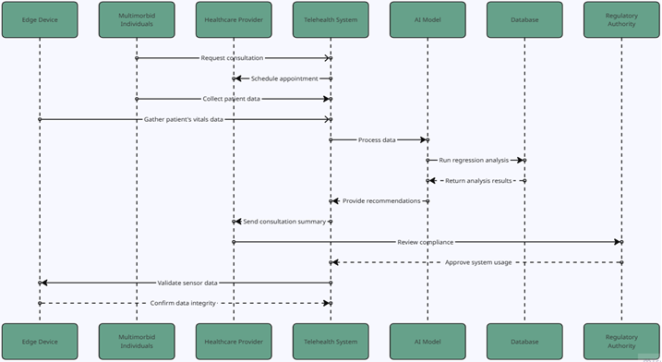
Meant for mapping out the sequence of actions that need to be followed, such as how data is gathered, initially processed at the edge, categorized by the predictive lightweight AI, and then safely transmitted to the Healthcare provider, using sequence and activity diagrams.
Architecture Refinement:
For refining the system architecture to enable it reflect the resource limitations of the edge devices and emphasize efficiency and scalability.
Unified Modeling Language (UML) Diagram
All the analysis and design above were captured in a detailed unified modeling language diagram. These models were used as key visual designs of the logical and physical parts of the RPM telehealth system. They drastically enhanced the clarity to the stakeholders, improved the communication between non-technical and technical team members, and created a traceability of the requirements delivered to the final implementation.
Figure 1. RPM Telehealth System UML Diagram.
RPM Telemedical model design
The main goal of the study was to design and simulate an integrated edge-based home-care telemedical model in Kenya to enhance healthcare accessibility by reducing infrastructural load on centralized healthcare facilities. Specifically, in low resource settings by leveraging local data processing capabilities among multimorbid Patients in select healthcare institutions to address identified healthcare challenges.
Conceptual Model Components
1) The edge devices components mainly constitute of the wearables & sensors with affordable Bluetooth-enabled low energy (BLE) devices for vital signs data collections including pulse oximeters, smart blood pressure monitors, continuous glucose monitors among others.
2) The Light weight AI model which plays a key role in processing and analytics of vitals from the Edge devices.
3) Mobile device Interface such as smartphone Android or tablets running a dedicated application for patient interaction, reminders, and basic monitoring.
4) Model Interactions: Data collection was done from virtual patients who were either on home care or accessing health services remotely. Once data was collected, local processing was done at edge devices, decision support then happened with support of edge servers and finally communication with central health facilities.
5) Identified Variables - Model input variables: Patient demographic dataset, health vital metrics, Model State and expected output variables.
Functional and Non-Functional requirements
Functional requirements
1) The integrated RPM continuously collect and transmits vital signs such as heart rate, blood pressure, temperature, ECG from patient-worn or home-based sensors to a local edge gateway.
2) The embedded LR algorithm which performs immediate, on-device analysis of collected vital sign data to detect anomalies, trends, and predefined critical thresholds.
3) The integrated RPM that autogenerates immediate alerts to patients, caregivers or healthcare providers upon detection of critical health events.
4) Database local data storage and synchronization: It securely store raw and pre-processed health data locally on the edge gateway, synchronizing with a central cloud repository when stable internet connectivity is available.
5) Medication reminders and adherence tracking and allows for patient and caregiver input on adherence, with data stored and synchronized at the edge.
6) Remote Prescription Management: Allow healthcare providers to securely send prescriptions or care plan updates to patients, accessible via the edge gateway or patient interface.
7) Data visualization and reporting for providers RPM present patient health data in an intuitive dashboard for healthcare providers, facilitating informed decision-making.
Non-Functional Requirements
1) Latency: Critical alerts from edge analysis should be processed and dispatched within milliseconds locally and within seconds to providers when internet connectivity and throughput is enabled.
2) Offline Capability; RPM should be able to perform core monitoring, preliminary analysis, and alert generation should function autonomously at the edge.
3) Scalability: The system architecture must support the addition of new patients, edge devices, and healthcare providers without significant re-engineering, capable of scaling to thousands of users across various geographical locations.
4) Reliability, Security and Availability The system should exhibit high uptime for critical monitoring functions up to 99.9% for edge processing.
5) Privacy and Compliance: The model adheres strictly to the Kenya Data Protection Act, 2019, and the Digital Health Act, 2023. This includes obtaining explicit patient consent for data collection and processing, implementing data minimization principles, ensuring pseudonymization where appropriate, and providing mechanisms for data portability and erasure rights.
High-Level System Architecture
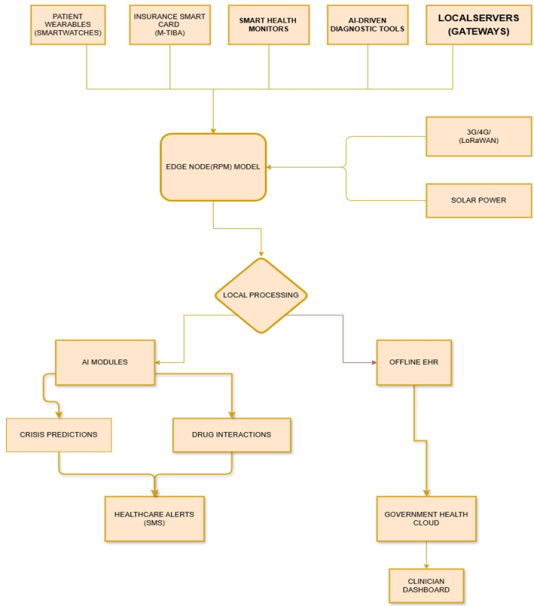
The proposed edge-based telehealth system adopted a multi-layered architecture, distributing processing and intelligence closer to the data source to minimize internet dependency and enhance real-time capabilities.
Figure 2. Multi-layered Model Architecture.
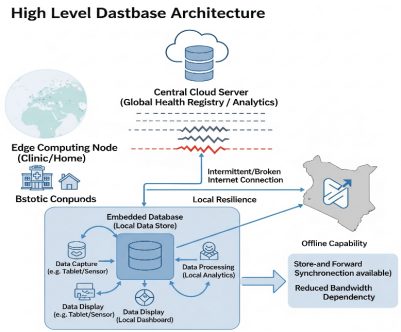
Figure 3. Offline-First EHR Synchronization-Sequence Diagram.
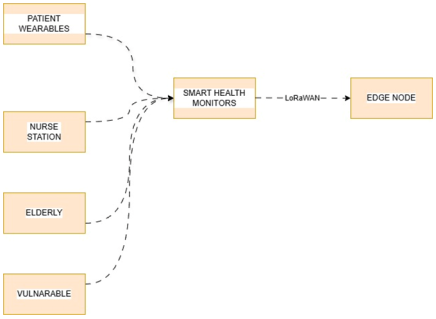
Telehealth System Architecture
Layered Architecture components and interactions
1) Edge Device Layer: This initial layer Comprise of various smart sensors and medical devices such as wearable heart rate monitors, smart blood pressure cuffs, glucose meters located directly on or near an individual at home set up. These devices collect raw physiological vital data. A dedicated patient interface device like smartphone serves as primary point of interaction for medication reminders, telehealth and basic data display operation.
2) Local Processing and gateway: This is the core of the edge computing integration that consists of a local edge gateway or a specialized IoT gateway deployed in the patient's environment. It performs data aggregation by collecting data from various patient devices through local wireless protocols such as Bluetooth Low Energy and Zigbee network technologies
3) Preliminary analysis -Logistic Regression ML: This module Performs real-time, lightweight analytics on the aggregated data including trend analysis, anomaly detection, and comparison against personalized health thresholds.
4) Local data buffering & storage: This layer securely stores collected raw and pre-processed data locally crucial for maintaining data integrity during periods of no internet connectivity until a stable connection is available for synchronization.
5) Communication Layer: The communication layer manages the secure and optimized transmission of data between the Edge Layer and the central server. It also utilizes available internet connectivity and employs lightweight messaging protocols like MQTT for efficient data transfer, especially during intermittent connectivity.
6) Cloud / Central Server Layer: A centralized server infrastructure that could be a public cloud, private cloud, or hybrid that acts as the main repository for comprehensive patient data. Cloud server plays the role of long-term data storage and carrying out complex analytics. It also integrates the EHR interfaces for seamless data flow as well as hosting service provider dashboard for executing real time monitoring and telemedical operations
7) Healthcare Provider Interface Layer: This is a Web-based or mobile application dashboard accessible by authorized healthcare professionals for providing 360-degree view of patient health data, including real-time monitoring and alerts from the edge, historical trends, and aggregated insights from cloud analytics. Additionally, it facilitates secure communication with patients/caregivers, remote consultation management, and prescription updates.
2.1. Data Workflow Diagrams (DFD)
The following describes the actions on the data flow;
2.1.1. Data Collection
The Wearable sensors and home-based medical devices continuously collect physiological data such as BP, SpO2 and glucose levels from the patient. Data could typically be collected at regular desired intervals like every minute, every hour, or on demand.
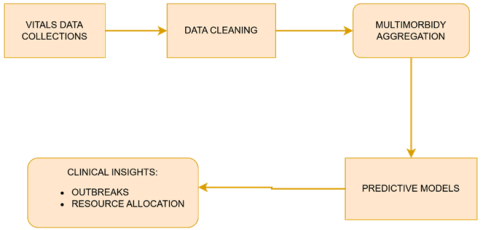
Figure 4. Patient Dataflow Diagram.
Edge node processing and analysis: Raw data is transmitted through the wireless media (BLE, Zigbee) to the local Edge Gateway. The Edge Gateway performs preliminary data processing by validating and filtering data from sensor for any errors, outliers, and cleanses the data.
Figure 5. Data Processing and Analysis.
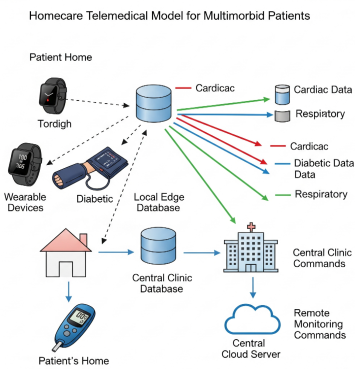
2.1.2. Database Schema and Architecture
The Figure below shows the database design that the model used. The database architecture for the homecare telemedical model is a three-tiered system designed to manage data for multimorbid patients, ensuring continuous monitoring while optimizing data flow and storage. The system comprises an Edge Layer, a Clinical Layer, and a Cloud Layer. The subsequent Figure 7 represents a database schema which defines its entities and the relationship among the entities of telehealth systems. It contains an explanatory description of the database, which can be represented by schema diagrams.
Figure 6. Database Schema Architecture.
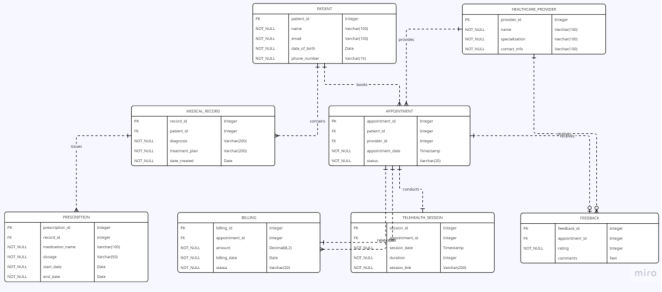
The database schema as captured above can be represented as shown in the figure below;
Figure 7. Database Schema.
a) Edge Layer: The Patient's location: The edge devices are equipped with edge computing capabilities to perform initial data processing and analysis locally. The devices wirelessly transmit patient vitals data to a local edge database. This local database which acts as a data concentrator and a buffer, ensuring that all data is captured even with unstable internet connectivity.
b) Clinical Layer the Central Clinic: The local edge database periodically synchronizes the aggregated and processed data with a central clinic database. The central clinic's database is the primary hub for a healthcare providers team with a comprehensive view of the patient's health trends . From here, clinicians can access patient records, review aggregated data, and issue remote monitoring and intervention commands back to the patient's home devices.
c) Cloud Layer: The Central Cloud Server: The final layer is the central cloud server, which receives data from multiple clinics. This is the long-term data repository and the hub for large-scale analytics. It's used for research, public health surveillance, and advanced machine learning models to predict health events. The cloud server also provides a backup for all data and allows for patient data to be accessed by authorized specialists from any location.
2.1.3. Dataset
1. Secondary dataset: The Kenyan public health records data were used for contextual data. This historical contextual data informed the simulation model of the RPM for data analysis and results. The telemedical model system performance data including network latency, bandwidth speed and throughput relied on secondary dataset and simulation scenarios for analysis and simulation runs. This was crucial to analyze system performance, identify patterns and trends as well as determine thresholds for alerts, interventions and make inference from the proposed telehealth model.
2. Primary dataset for simulation: The study also utilized the datasets from MIMIC-IV -Medical information mart for intensive care, a publicly available de-identified clinical database containing comprehensive data from over 40,000 patients admitted to intensive care units at the Beth Israel Deaconess Medical Center . The MIMIC database contains high-frequency, granular, and de-identified patient vital signs data including BP, heart rate, and SpO2 from real-world intensive care unit (ICU) patients. This rich dataset provided a perfect proxy for the kind of continuous data stream that would be generated by multimorbid patients under remote monitoring. It contains a diverse range of physiological measurements, including both normal and abnormal patterns, which are essential for testing the efficacy of the proposed anomaly detection models relevant to the proposed remote patient architecture for Kenyan context.
2.1.4. Contextual Dataset
Data from the Kenya Demographic and Health Survey (KDHS) was used to provide statistical context on the prevalence of key NCDs and multimorbidity in Kenya. This information informed the simulation parameters, such as the assumed number of patients in a facility and the types of physiological data to prioritize. World Bank/ITU Data Statistical data and metrics on internet penetration, average bandwidth speeds, and telecommunication costs in Kenya were sourced from the World Bank Development Indicators and the International Telecommunication Union (ITU) databases. This statistical data was crucial for creating realistic network conditions and simulation scenarios by establishing baselines for latency, band width and downtime probabilities to be introduced into the cloud-based model simulation to accurately reflect the Kenyan context reality.
2.2. Telehealth Model Simulation Set up Environment
A hybrid simulation conceptual framework was designed and developed using the drawing.io to visualize the telehealth system's prototype. The machine learning model for predicting clinical deterioration was implemented and executed in a Python environment using the scikit-learn library in Visual Studio code integrated development environment (IDE). The network behavior and parameters were simulated using Python-based network simulation to accurately model the latency, bandwidth, and packet loss characteristics of a typical internet connection in a low-resource rural Kenyan healthcare facility. This was accomplished using statistical model of network performance based on published ITU data for Kenya.
The various components were integrated via a custom python script that acted as main controller. For each data packet generated, the script first processed it through the machine learning model. Based on the model's output, the script then instructed the network simulation to route the packet to the cloud only if a critical alert was generated as shown in Figure 10 (high level architecture). Key performance indicators (KPIs) such as total bandwidth consumed and end-to-end latency were recorded by the python controller for subsequent analysis.
2.3. The Lightweight AI Model
The core intelligence of the edge-based telemedical model is a lightweight artificial intelligence (AI) model that need to be deployed directly on the edge devices. Its primary function is to perform real-time analysis of incoming patient vitals to detect clinical anomalies and predict indicative of deterioration in multimorbid patients. This section outlines the design, training, optimization, and integration process of this model.
AI models implementation
The Logistic Regression model which is a supervised classification algorithm that models the probability of a binary outcome using a sigmoid function. It was well-suited for this project due to its linearity operation, interpretability and efficiency. The LR model was implemented with L2 regularization using the Scikit-learn python library to prevent overfitting initializing the Logistic Regression class in a Vscode development environment. The implementation python snippet was then captured in Appendix section of this document. The model was then trained on the training dataset by finding the target variables.
2.4. Dataset Preparation for Model Training
The model was trained on the MIMIC-IV secondary dataset. The preparation steps were as follows:
Step 1. Feature Engineering: Based on clinical relevance to multimorbidity (Hypertension/Diabetes) and availability from standard wearable sensors, the features extracted were: age, heartrate, systolic, diastolic, blood glucose, spo2.
Step 2. Target Variable Definition: The binary target variable anomaly flag was created based on clinically derived thresholds. A reading was flagged as an anomaly (1) or normal (0).
Step 3. Data Preprocessing: Features were normalized to ensure stable model training. Missing values for selected features were imputed using the median value.
Model Training and Evaluation metrics;
The dataset was split into a training set (80%) and a hold-out test set (20%). The Logistic Regression model was trained using L2 regularization to prevent overfitting. The performance of the optimized Logistic Regression model was evaluated using a comprehensive set of metrics selected to assess both its clinical diagnostic capability and its suitability for deployment on resource-constrained edge devices. Diagnostic accuracy was be evaluated using standard binary classification metrics, chosen due to the critical nature of minimizing both missed anomalies featuring false negatives and false alarms indicating false positives in a healthcare setting including:
1) Accuracy: Overall correctness of the model.
2) Precision: The proportion of true anomalies among all predicted anomalies.
3) Recall or Sensitivity: The proportion of actual anomalies correctly identified.
4) F1-Score: The harmonic mean of precision and recall, providing a single metric for model balance.
5) Area under the receiver operating characteristic curve (AUC-ROC): The model's ability to distinguish between classes.
Operationalization of the prediction task
The model was configured for a binary classification task as per the following steps;
Target Variable: Multimorbidity Status
Class 1 (Positive Case): Presence of both hypertension and diabetes in a patient.
Class 0 (Negative Case): Presence of only one or neither condition.
Input Features: The model utilizes a set of readily available, low-cost clinical and demographic variables identified as relevant risk factors for multimorbid patients.
The feature extraction pipeline was implemented using Python-script. The complete Python implementation can be found in Appendix section
Model hyperparameters were optimized using grid search, with the configuration details provided in Appendix and graphically shown in the Analysis section.
The Predictive Model Formula
The core of the model is the sigmoid function, which maps a linear combination of input features to a probability between 0 and 1. The probability that a patient has hypertension/diabetes multimorbidity is given by:
Figure 8. Predictive Model Formula.
Integration into the RPM system
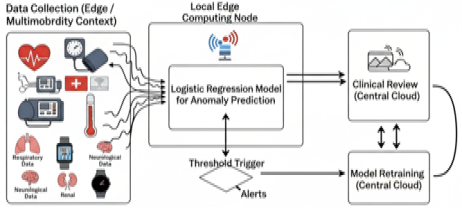
Within the hybrid Python simulation, the logistic regression AI model was integrated to perform under various Simulation scenarios. Since the core objective was to design, simulate and evaluate the performance of an edge-based telehealth system., especially under low-internet connectivity conditions in resource- constrained healthcare institutions in Kenya as shown in the contextualized Conceptual framework below;
Figure 9. Contextualized Integrated RPM Framework.
The AI model was integrated to perform as follows:
Central cloud server model simulation: For each patient reading, the raw data was packaged and passed to the network simulation module for immediate transmission to the cloud. The AI inference was assumed to happen when there is a stable internet connectivity or on the cloud server after the network delay.
Edge processing model simulation: For local edge processing and prediction, each of the patient vitals readings, the serialized model (lr_model.pkl) was loaded into the simulated edge device's memory. The inference (model. Predict () is executed instantly and processed locally on the edge device. if the prediction is an anomaly (1) a small alert packet generated and passed to the network simulation module for transmission. This design allows for a direct comparison of the telehealth system-level KPIs between an architecture where intelligence is centralized in the cloud versus one where it is distributed to the edge .
2.5. Simulation and Evaluation Metrics
Simulation scenarios were designed to mimic real-world conditions in Kenya, particularly focusing on low resource settings areas:
1) Varying network conditions: Test the system's offline capabilities for local processing and alerts.
2) Varying patient loads: Simulate different numbers of active patients and connected devices to assess scalability and resource utilization at the edge gateway during Remote patient monitoring.
3) Critical event simulation: Introduce simulated critical health events to evaluate the system's ability to detect, alert, and prioritize transmission of critical data.
4) Edge verses cloud processing load: Evaluate the distribution of computational load between the edge and cloud layers to demonstrate the benefits of edge processing as compared to Cloud processing.
Operational efficiency evaluation of the RPM.
Evaluating the RPM program utilizing Logistic regression AI model involved assessing various dimensions to ensure its effectiveness, efficiency, and overall impact on patient outcomes. The key aspects and metrics that was considered when evaluating the model were;
1) Technological Integration: the research aimed at assessing the ability of the RPM system to integrate with existing Electronic Health Records (EHR), edge computing technologies and other healthcare IT systems; User Interface: Evaluate the user-friendliness of the software interfaces for both patients and providers.
2) Economic Impact The study compared healthcare costs such hospital stays, emergency visits) before and after RPM implementation, Track reimbursement rates from insurers and other financial for RPM services.
3) Operational Efficiency; device reliability: The study evaluated the performance and reliability of the monitoring devices; data Accuracy: Assess the accuracy and consistency of the data collected by the devices; Response Time: Measure the time taken by healthcare providers to respond to alerts or abnormal readings.
3. Results
3.1. Descriptive Analysis of the Kenyan Context
Characterization of simulated network environments
The study investigated statistical data on ITU and World Bank data, the simulation parameters for the traditional cloud model were defined by an average latency of 1750 ms, a bandwidth limit of 4.2 mbps, and an intermittent downtime of 28%. These figures quantitatively represent the infrastructure gap that cripples standard cloud-dependent telehealth in rural and semi-urban areas Kenya. The 28% downtime means a cloud-based system would be completely non-functional for over a quarter of the time, creating critical gaps in patient monitoring.
Projected Cost of data transmission for cloud-only models
The simulation of the cloud model processing data for 50 patients showed a total bandwidth consumption of 62.5 GB per month. Using average Kenyan data costs approximately Ksh.5 /MB which translates to an estimated operational cost of ksh. 312,500 per month per facility for data transmission alone. The findings are summarized in the table below;
Table 1. Simulated Operational Challenges for Cloud-based Telemedical Models.

Challenge Dimension

Simulated Parameter

Frequency

Implication for Healthcare Access

Network Reliability

System Downtime

28%

Care interruptions, missed alerts, unreliable service delivery.

Network Performance

Average Latency

1750 ms

Delayed clinical decisions, slow response to crises.

Financial Sustainability

Monthly Data Cost/50 patients’ lot

Ksh.312,500 P.m

Financially unsustainable for most facilities, limiting scale.

3.2. Comparative Performance Analysis of Telemedical Models
Quantitative Performance Metrics (KPIs)
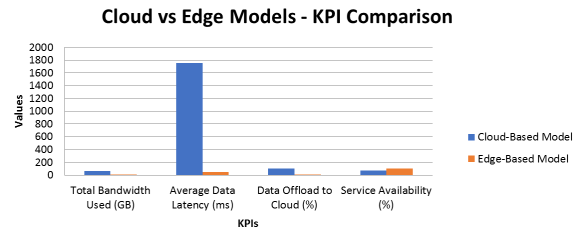
The proposed edge-based telemedical model utilizing logistic regression algorithms demonstrated superior performance across all four Key Performance Indicators (KPIs). The results provide empirical evidence that the edge architecture directly mitigates the challenges of cloud-based telemedical models as defined in section.
Table 2. Comparative Performance of Cloud vs. Edge Telemedical Models.

Key performance indicator (KPI)

Cloud-based model

Edge-based model

Improvement

Practical implication

Total Bandwidth Used

62.5 GB

4.38 GB

93% Reduction

Drastic reduction in operational data costs.

Average Data Latency

1750 ms

50 ms

97% Reduction

Enables real-time, life-saving clinical alerts.

Data Offload to Cloud

100%

7%

93% Reduction

Minimizes dependency on continuous connectivity.

Service Availability

72%

100% (Local)

28% Increase

Guarantees continuous monitoring, even offline.

Figure 10. Cloud vs Edge Models - KPI Comparative Performance.
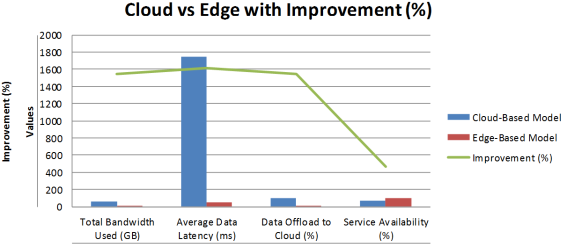
Figure 11. Figure Cloud vs Edge with Improvement (%).

Projected Economic Impact of the edge-based telemedical model
From the above analysis, it is clear that the 93% reduction in bandwidth usage by edge-based model reduces the projected monthly data cost from ksh. 312,500 KES to ksh. 21,875 for a 50-patient cohort simulated This reduces a major financial barrier, transforming telehealth system from a cost-prohibitive concept into a financially viable solution for Kenyan health facilities especially in a low resource setting environment. The model promises significant cost savings, enhancing the sustainability of digital health initiatives.
3.3. Simulation Results
The simulation results conclusively demonstrated that the edge-based telemedical models significantly outperformed the traditional cloud-based approach in the context of Kenyan low-resource settings. It effectively mitigates the core challenges of infrastructure limitations and high operational costs, while enhancing the reliability and responsiveness of remote patient monitoring for multimorbid populations.
This analysis confirmed that integrating edge computing into telehealth systems is not merely a technical enhancement but a necessary paradigm shifts for implementing feasible, sustainable, and effective telehealth in Kenya. The proposed model successfully transforms the fundamental proposition of digital health from one dependent on robust infrastructure to one that is resilient and optimized for constraint, thereby directly contributing to the goal of enhancing healthcare access.
3.4. Technical Performance of the Edge-based Telehealth Systems
The edge-based telemedical model comprising of various edge computing components simulation and analysis demonstrated significant improvements in health system performance through edge computing integration in terms of bandwidth efficiency. The edge-based model achieved a 93% reduction in bandwidth consumption compared to traditional cloud-based systems, decreasing from 62.5 GB to 4.38 GB monthly for a 50-patient cohort. This is clear inference of embracing the edge-based systems. Data processing latency was reduced by over 97%, from 1750 ms in cloud-based telemedical systems to under 50 ms in the edge-based model simulation based on literature review which is a significant factor when it comes to choosing between cloud-dependent and edge-based healthcare systems. In terms of system resilience, the designed edge-based telemedical model architecture maintained almost 100% operational capability and uptime when subjected to critical network outages, this outscores the best approach when addressing the critical challenge of Kenya's intermittent connectivity that affects 28% of operational time in significant number of healthcare institutions. It is also worth noting that edge-based model application projected a reduction in data transmission costs from approximately KES 312,500 to KES 21,875 monthly per facility, representing a 93% decrease in operational expenses in a sampled sized cohort which outlines its viability for implementation as it is more cost efficient.
4. Discussion
Addressing Infrastructure and Financial Barriers
The edge-based telemedical model’s 93% reduction in bandwidth directly tackles the prohibitive data costs. The 100% local service availability ensures continuous operation during the 28% simulated downtime, directly addressing the challenge of network unreliability. This resilience is critical for building trust among healthcare workers who cannot rely on a system that fails during outages.
Enhancing Clinical Workflow and Patient Outcomes
The reduction in latency from 1.75 seconds to under 50 milliseconds transforms clinical response. For a multimorbid patient experiencing a hypertensive crisis, this difference is between a nurse receiving an alert almost instantly versus after a dangerous delay. This directly enhances the quality and safety of remote patient health care. The local processing automates the initial screening, reducing the cognitive load on healthcare workers and potentially mitigating the impact of workforce shortages by allowing nurses to focus only on genuine alerts rather than constant data monitoring.
Validation of the Proposed Architecture
The decision to process data and run the logistic regression lightweight AI model on the edge node is proven correct by the massive efficiency gains. The cloud layer's role for intermittent synchronization and long-term storage is justified by the minimal (7%) but critical data offload.
Clinical Relevance of Edge-based telehealth systems.
The RPM telehealth systems which utilize core lightweight Logistic regression AI model which was employed using demonstrated strong performance in predicting clinical deterioration among multimorbid patients with an F1-score of 0.89, recall of 0.93, and precision of 0.90 which are key in linear prediction of anomalies in health. The healthcare access for multimorbid patients in Kenya remains constrained by geographic distance, limited infrastructure, and resource scarcity. This implies that there is a need for technological research and innovation to avert these healthcare access challenges especially in low-connectivity areas. Most of the aforementioned challenges cause delays in diagnosis and inadequate monitoring systems worsening patient outcomes, especially in rural facilities. The edge architecture enabled near-instantaneous clinical alert generation which was less than 50 ms. This is a clear indication towards facilitating timely interventions for critical healthcare conditions.
5. Conclusions
The study concludes that integration of edge-based computing technologies and telemedical models presents a technically viable and superior alternative to traditional cloud-based telemedical models for low-resource settings. The designed architecture successfully addresses fundamental healthcare infrastructure limitations characterized by Kenyan healthcare facilities, particularly in rural and low-resource-constrained urban areas where connectivity constraints have previously hindered accessible digital health implementation by the relevant stakeholders.
The Edge-based telemedical models simulated by the study demonstrate significant potential for enhancing care delivery for multimorbid patients in Kenya. The system's ability to provide continuous monitoring, real-time alerts, and clinical decision support addresses critical gaps in current care pathways, particularly the challenges of fragmented care and limited specialist access that characterize multimorbidity management in resource-constrained settings.
Abbreviations

OOA

Object-Oriented Analysis and Design

NCDs

Non-communicable Diseases

ITU

International Telecommunication Union

KDHS

Kenya Demographic and Health Survey

RPM

Remote patient Monitoring

EHR

Electronic Health Records

AI

Artificial Intelligence

KNBS

Kenya National Bureau of Statistics

ML

Machine Learning

SDGs

Sustainable Development Goals

Conflicts of Interest
The authors declare no conflicts of interest.
References
[1] Boikanyo, K., Zungeru, A. M., Sigweni, B., Yahya, A., & Lebekwe, C. (2023). Remote patient monitoring systems: Applications, architecture, and challenges. Scientific African, 20.
[2] Fulmer, T., Reuben, D. B., Auerbach, J., Fick, D. M., Galambos, C., & Johnson, K. S. (2021). Actualizing better health and health care for older adults. Health Affairs, 40(2), 219-225.
[3] Johnson, A. E. W., Bulgarelli, L., Shen, L., Gayles, A., Shammout, A., Horng, S., Pollard, T. J., Hao, S., Moody, B., Gow, B., Lehman, L. H., Celi, L. A., & Mark, R. G. (2023). MIMIC-IV, a freely accessible electronic health record dataset. Scientific Data, 10(1), 1.
[4] KAHVECİ, K., KOÇ, O., & AKSAKAL, H. (2020). Home-based Palliative Care. Bezmialem Science, 8(1), 73-80.
[5] Li, C., Wang, J., Wang, S., & Zhang, Y. (2024). A review of IoT applications in healthcare. Neurocomputing, 565, 127017.
[6] Mayo clinic. (2021). Mayo Clinic study highlights development of remote patient monitoring program during COVID-19 pandemic.
[7] Mohamed, S. F., Haregu, T. N., Uthman, O. A., Khayeka-Wandabwa, C., Muthuri, S. K., Asiki, G., Kyobutungi, C., & Gill, P. (2021a). Multimorbidity from chronic conditions among adults in urban slums: The awi-gen nairobi site study findings. Global Heart, 16(1).
[8] Neußner, O. (2021). Early warning alerts for extreme natural hazard events: A review of worldwide practices. International Journal of Disaster Risk Reduction, 60, 102295.
[9] Rana, Md. S., & Shuford, J. (2024). AI in Healthcare: Transforming Patient Care through Predictive Analytics and Decision Support Systems. Journal of Artificial Intelligence General Science (JAIGS), 1(1).
[10] Satyanarayanan, M. (2017). The emergence of edge computing. Computer, 50(1), 30-39.
[11] Schmidt, M., Schmidt, S. A. J., Adelborg, K., Sundbøll, J., Laugesen, K., Ehrenstein, V., & Sørensen, H. T. (2019). The Danish health care system and epidemiological research: From health care contacts to database records. Clinical Epidemiology, 11, 563-591.
[12] Schweitzer, A.-M., Dišković, A., Krongauz, V., Newman, J., Tomažič, J., & Yancheva, N. (2023). Addressing HIV stigma in healthcare, community, and legislative settings in Central and Eastern Europe. AIDS Research and Therapy, 20(1), 87.
[13] Zalte-Gaikwad, S. S., Zalte, S., Patil, M., Tone, S., & Randive, N. (n.d.). Edge Computing Technology: An Overview. Asian Journal of Organic & Medicinal Chemistry, 7(1).
Cite This Article
  • APA Style

    Kapkiyai, A. K., Njuki, S. K., Ng’ang’a, N. N., Okeyo, I. (2025). Edge-Based Telemedical Architecture Integrating Edge Devices and Lightweight AI for Healthcare in Kenya. World Journal of Public Health, 10(4), 586-600. https://doi.org/10.11648/j.wjph.20251004.26

    Copy | Download

    ACS Style

    Kapkiyai, A. K.; Njuki, S. K.; Ng’ang’a, N. N.; Okeyo, I. Edge-Based Telemedical Architecture Integrating Edge Devices and Lightweight AI for Healthcare in Kenya. World J. Public Health 2025, 10(4), 586-600. doi: 10.11648/j.wjph.20251004.26

    Copy | Download

    AMA Style

    Kapkiyai AK, Njuki SK, Ng’ang’a NN, Okeyo I. Edge-Based Telemedical Architecture Integrating Edge Devices and Lightweight AI for Healthcare in Kenya. World J Public Health. 2025;10(4):586-600. doi: 10.11648/j.wjph.20251004.26

    Copy | Download

  • @article{10.11648/j.wjph.20251004.26,
      author = {Askher Kipkoech Kapkiyai and Samson Kabangu Njuki and Njeri Ngaruiya Ng’ang’a and Isaac Okeyo},
      title = {Edge-Based Telemedical Architecture Integrating Edge Devices and Lightweight AI for Healthcare in Kenya},
      journal = {World Journal of Public Health},
      volume = {10},
      number = {4},
      pages = {586-600},
      doi = {10.11648/j.wjph.20251004.26},
      url = {https://doi.org/10.11648/j.wjph.20251004.26},
      eprint = {https://article.sciencepublishinggroup.com/pdf/10.11648.j.wjph.20251004.26},
      abstract = {Background: The growing burden of multimorbidity, which is the occurrence of two or more chronic conditions simultaneously in an individual is a great burden on the healthcare system of Kenya that is already defined by unequal distribution of resources and access to specialists. The solution to this gap may be found in telemedicine, but due to the dependency on centralized cloud computing, the effectiveness in the context of the resources-constrained environment is critically impaired. This dependence leads to chronic problems such as unreliable internet connection, power connectivity issues, large data latency making real-time intervention difficulty, excessive bandwidth prices, and, ultimately, piecemeal care of the multimorbid patients. Methods: The study employed the use of a combination of various approaches as it started with an extensive analysis of the current state of telemedicine and its limitation in managing multimorbidity both globally and locally. Then, an architectural framework of a conceptual edge-based framework was designed that defined the primary elements of local data processing, offline functionality, and real-time clinical decision support. Results: This study developed a new, edge-computing telemedical architecture that moves vital data processing and storage operations out of the cloud and on to local edge nodes (edge devices) at the point of care. The main aim was to develop a more robust, effective and responsive telehealth system that will be able to work efficiently even in low-connectivity settings. The possible effect of this framework was compared to the key performance indicators showing that there was a substantial theoretical reduction in the latency of data transmission and the bandwidth used. Moreover, the telemedical model is projected to improve continuity and coordination of care through the processing and acting of critical patient data about IoT devices such as blood pressure, glucose monitoring locally even when the internet is unavailable. Conclusion: Integration of edge computing is a feasible and strategic solution to the basic infrastructural constraints of cloud-based telemedicine in Kenya. The suggested model does not only overcome technical obstacles of connectivity and cost, but also presents a foundational framework of scalable, patient-centered and integrated care to the increasing population of multimorbid patients.},
     year = {2025}
    }
    

    Copy | Download

  • TY  - JOUR
    T1  - Edge-Based Telemedical Architecture Integrating Edge Devices and Lightweight AI for Healthcare in Kenya
    AU  - Askher Kipkoech Kapkiyai
    AU  - Samson Kabangu Njuki
    AU  - Njeri Ngaruiya Ng’ang’a
    AU  - Isaac Okeyo
    Y1  - 2025/12/31
    PY  - 2025
    N1  - https://doi.org/10.11648/j.wjph.20251004.26
    DO  - 10.11648/j.wjph.20251004.26
    T2  - World Journal of Public Health
    JF  - World Journal of Public Health
    JO  - World Journal of Public Health
    SP  - 586
    EP  - 600
    PB  - Science Publishing Group
    SN  - 2637-6059
    UR  - https://doi.org/10.11648/j.wjph.20251004.26
    AB  - Background: The growing burden of multimorbidity, which is the occurrence of two or more chronic conditions simultaneously in an individual is a great burden on the healthcare system of Kenya that is already defined by unequal distribution of resources and access to specialists. The solution to this gap may be found in telemedicine, but due to the dependency on centralized cloud computing, the effectiveness in the context of the resources-constrained environment is critically impaired. This dependence leads to chronic problems such as unreliable internet connection, power connectivity issues, large data latency making real-time intervention difficulty, excessive bandwidth prices, and, ultimately, piecemeal care of the multimorbid patients. Methods: The study employed the use of a combination of various approaches as it started with an extensive analysis of the current state of telemedicine and its limitation in managing multimorbidity both globally and locally. Then, an architectural framework of a conceptual edge-based framework was designed that defined the primary elements of local data processing, offline functionality, and real-time clinical decision support. Results: This study developed a new, edge-computing telemedical architecture that moves vital data processing and storage operations out of the cloud and on to local edge nodes (edge devices) at the point of care. The main aim was to develop a more robust, effective and responsive telehealth system that will be able to work efficiently even in low-connectivity settings. The possible effect of this framework was compared to the key performance indicators showing that there was a substantial theoretical reduction in the latency of data transmission and the bandwidth used. Moreover, the telemedical model is projected to improve continuity and coordination of care through the processing and acting of critical patient data about IoT devices such as blood pressure, glucose monitoring locally even when the internet is unavailable. Conclusion: Integration of edge computing is a feasible and strategic solution to the basic infrastructural constraints of cloud-based telemedicine in Kenya. The suggested model does not only overcome technical obstacles of connectivity and cost, but also presents a foundational framework of scalable, patient-centered and integrated care to the increasing population of multimorbid patients.
    VL  - 10
    IS  - 4
    ER  - 

    Copy | Download

Author Information
  • Abstract
  • Keywords
  • Document Sections

    1. 1. Introduction
    2. 2. Methods
    3. 3. Results
    4. 4. Discussion
    5. 5. Conclusions
    Show Full Outline
  • Abbreviations
  • Conflicts of Interest
  • References
  • Cite This Article
  • Author Information